
You can remove plaque at home with daily brushing and flossing — but once plaque hardens into tartar, only a dentist or hygienist can remove it safely with professional instruments. Plaque can harden in as little as 24 to 72 hours. If tartar builds up below the gumline, you may need a deep cleaning (scaling and root planing). At Hampton Family Dental in Southampton, PA, Dr. Jeffrey Brenner and the hygiene team use ultrasonic scalers and hand instruments to remove tartar and keep your gums healthy.
The short version
- Plaque is soft and removable with brushing and flossing. Tartar is hardened plaque that only a dental professional can remove.
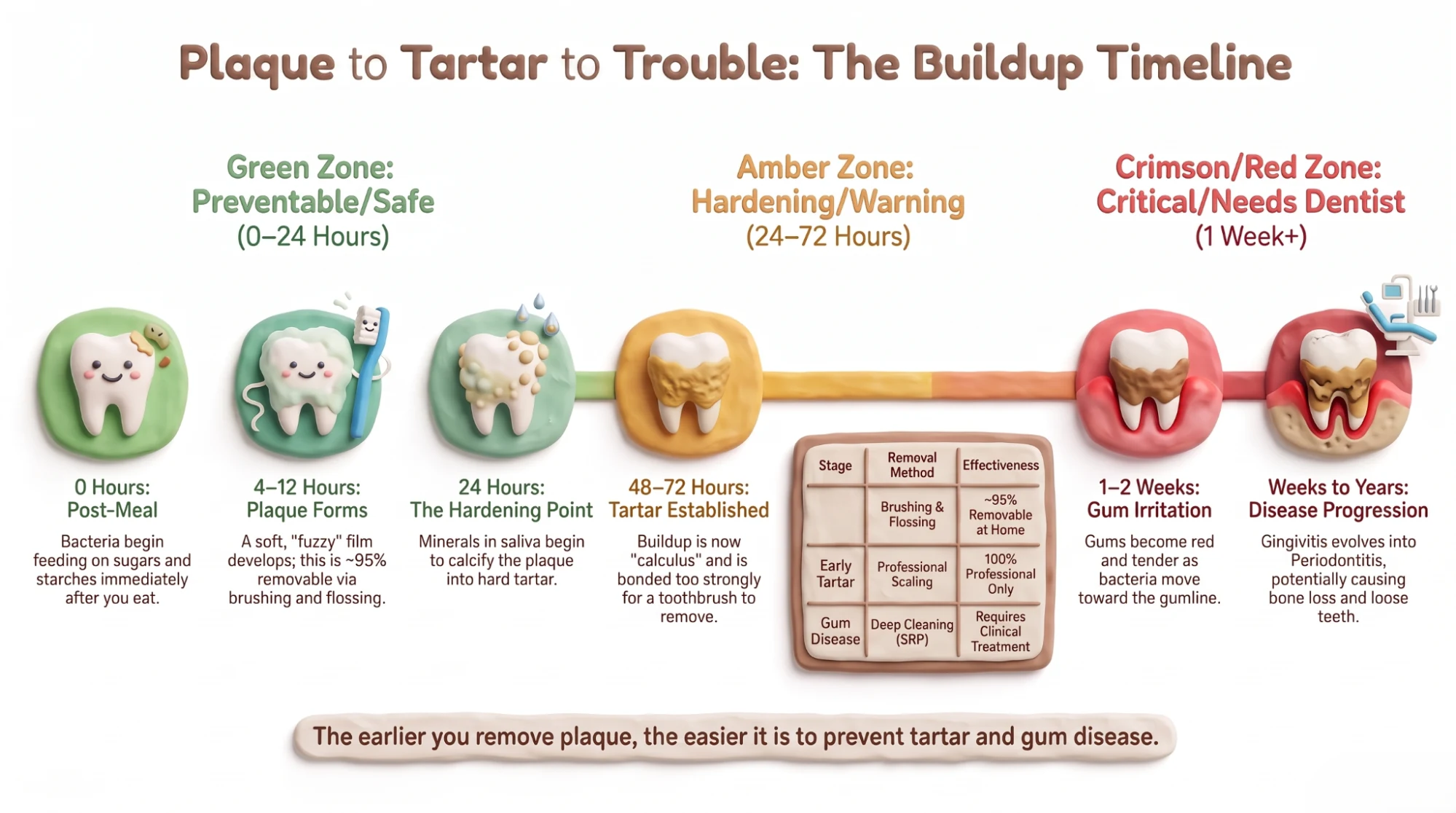
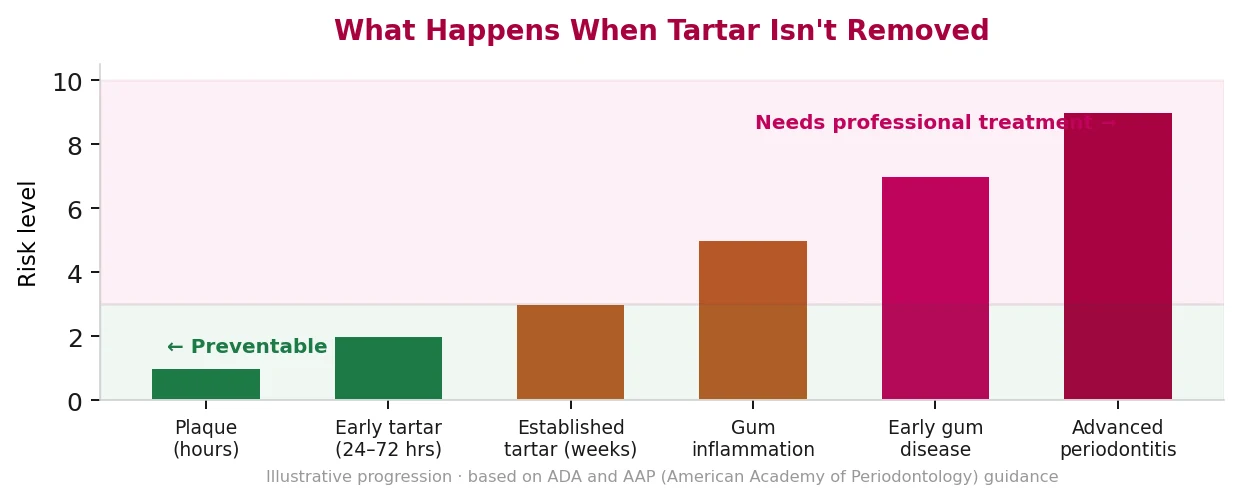
- Plaque can harden into tartar in as little as 24 to 72 hours if not cleaned away.
- A regular cleaning removes buildup above the gumline. A deep cleaning (scaling and root planing) goes below it when gum pockets are 4mm or deeper.
- Perio Protect delivers medication under the gumline to fight gum disease between visits.
- Our membership plan from $288/year covers two cleanings, exams, and X-rays, plus 15% off other procedures.
What's the difference between plaque and tartar?
Plaque is a soft, sticky film of bacteria that forms on your teeth after eating. You can feel it with your tongue — that fuzzy coating, especially along the gumline. Brushing and flossing remove it. Tartar (also called dental calculus) is what plaque becomes when it is not removed. Within 24 to 72 hours, minerals in your saliva harden the plaque into a rough, yellow or brownish deposit. Once tartar forms, you cannot brush it off — it bonds to your enamel and needs professional instruments to remove.
This distinction matters because most people who search for “how to remove tartar at home” are actually looking for ways to remove plaque before it becomes tartar. The good news: that is something you can absolutely do.
Can you remove tartar at home?
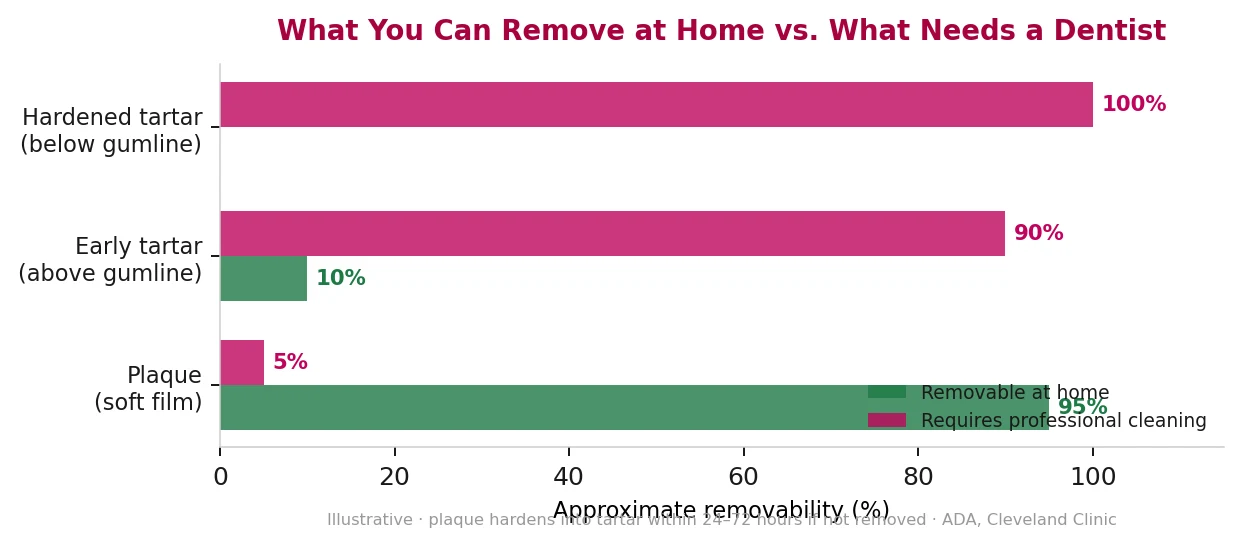
The short answer is no. Once tartar has formed, no amount of brushing, flossing, or home remedies will remove it. Scraping your teeth with sharp tools at home can damage your enamel and gums — dentists strongly advise against it.
What actually works at home (and what doesn't)
| Method | Removes plaque? | Removes tartar? | Notes |
|---|---|---|---|
| Brushing (soft-bristle, 2×/day) | Yes | No | The single most effective home method for preventing tartar |
| Flossing (daily) | Yes | No | Cleans between teeth where your brush can't reach |
| Tartar-control toothpaste | Prevents new tartar (up to ~35%) | No | Contains pyrophosphates; ADA-accepted options available |
| Antimicrobial mouthwash | Reduces bacteria | No | Supplement, not a substitute for brushing and flossing |
| Baking soda / DIY remedies | Limited plaque effect | No | Not ADA-recommended; may be abrasive over time |
| Home dental scalers | — | Risky | Can damage enamel and gums; not recommended |
You can prevent plaque from becoming tartar. You cannot remove tartar once it forms. That is why regular dental visits matter — your hygienist catches the buildup before it becomes a bigger problem. Schedule professional cleanings in Southampton.
How do dentists remove tartar?
Your dentist or hygienist uses two main types of instruments. Ultrasonic scalers vibrate at high frequency to break tartar away from the tooth surface, while a water spray flushes debris as it works — most patients find this comfortable. Hand curettes and scalers are fine metal instruments used to carefully remove remaining deposits by hand, especially in tight spots between teeth and just below the gumline. A routine cleaning typically takes 30 to 60 minutes and removes tartar from above the gumline. It is painless for most people and requires no anesthesia.
When do you need a deep cleaning?
A deep cleaning — formally called scaling and root planing (SRP) — is recommended when tartar and bacteria have accumulated below the gumline and your gum pockets measure 4 millimeters or deeper. Your dentist measures pocket depth during your exam with a small probe. Signs you may need a deep cleaning include gums that bleed when you brush or floss, persistent bad breath, gums pulling away from teeth, and loose teeth. For more on the early warning signs, read our guide on early signs of gum disease.
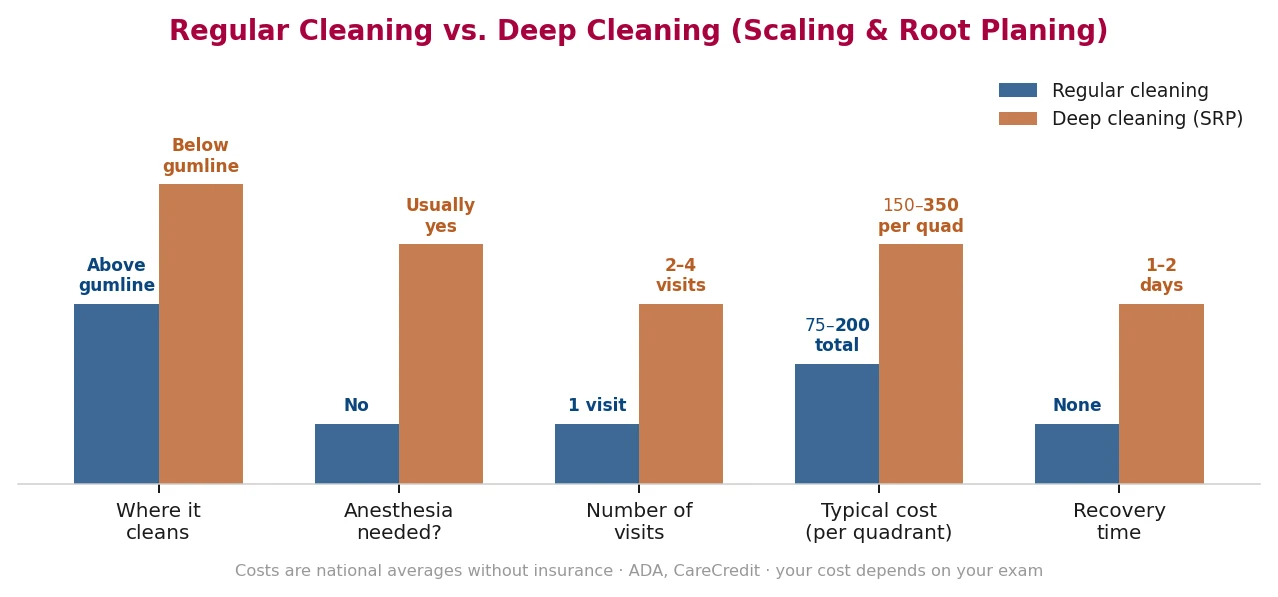
Regular cleaning vs. deep cleaning (SRP): what's different?
| Factor | Regular cleaning | Deep cleaning (SRP) |
|---|---|---|
| What it does | Removes plaque and tartar above the gumline | Removes tartar and bacteria below the gumline + smooths tooth roots |
| When it's needed | Routine (every 6 months) | When pockets are 4mm+ or gum disease is present |
| Anesthesia | Not usually needed | Local anesthesia typically used |
| Visits | 1 visit, 30–60 min | 2–4 visits (done in quadrants) |
| Cost (without insurance) | $75–$200 total | $150–$350 per quadrant |
| Recovery | None | Mild sensitivity for 1–2 days |
Verify your insurance coverage before treatment. Our membership plan and current specials ($288/yr) include cleanings, exams, X-rays and 15% off procedures.
What is Perio Protect and how does it help?
Perio Protect is a prescription-tray system designed to deliver medication directly under the gumline — the area regular brushing and flossing cannot reach. It is used to treat gum disease and maintain gum health between dental visits. Your dentist takes impressions of your teeth and custom trays are made; you place a prescribed gel into the trays and wear them for a few minutes each day. The trays create a seal that keeps the medication in contact with the gum tissue below the gumline, where bacteria live.
Perio Protect is not a replacement for professional cleanings or deep cleanings — it is a complement that helps maintain results. Learn about Perio Protect treatment at Hampton Family Dental.
How to prevent tartar buildup
The best way to deal with tartar is to stop plaque before it hardens:
- Brush twice a day for two minutes with a soft-bristle or electric toothbrush
- Floss once a day — especially along the gumline and between tight teeth
- Use an ADA-accepted tartar-control toothpaste (look for the ADA Seal)
- Rinse with an antimicrobial or fluoride mouthwash
- Limit sugary and starchy snacks — these feed the bacteria that form plaque
- Stay hydrated — dry mouth accelerates plaque buildup
- See your dentist every 6 months for a professional cleaning and exam
Due for a cleaning?
Book a cleaning and we'll assess your gum health, remove any buildup, and tell you honestly whether a routine cleaning is enough.