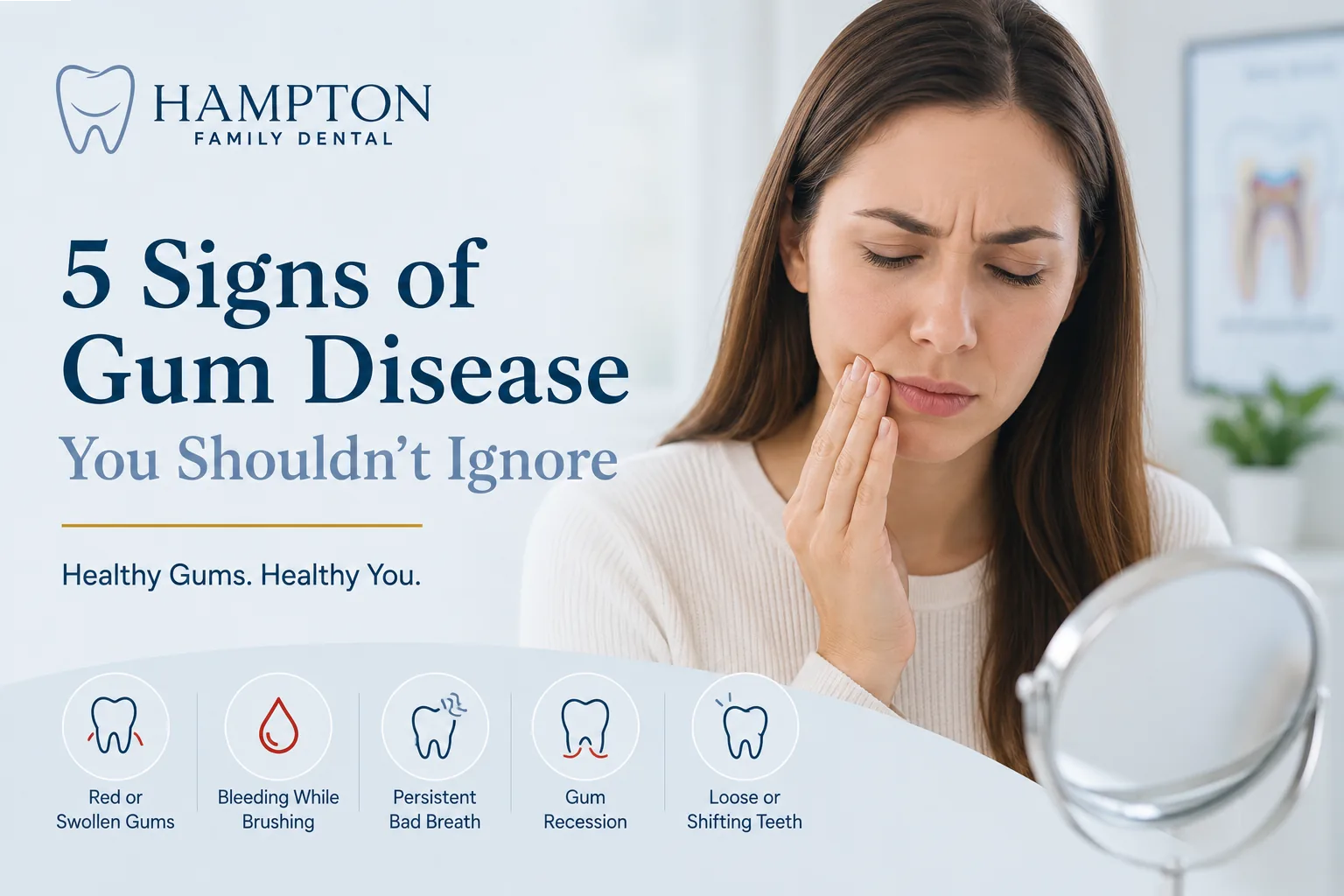
The five most common signs of gum disease are red or swollen gums, gums that bleed when you brush or floss, gums pulling away so teeth look longer, persistent bad breath or a bad taste, and loose or shifting teeth. Gum disease is often painless early on, when it's still reversible — so if you notice any of these, see a dentist. At Hampton Family Dental in Southampton, PA, catching it early means gentler treatment.
The short version
- The five signs to watch: red/swollen gums, bleeding, receding gums, persistent bad breath, and loose teeth.
- Gum disease is often silent — it usually doesn't hurt early, which is exactly why it gets missed.
- Caught early (gingivitis), it's fully reversible; left to advance (periodontitis), it's manageable but permanent.
- It's very common — the CDC estimates about 47% of adults 30 and older have some form.
- Early detection means gentler treatment — often a simple cleaning or a minimally-invasive option, not surgery.
What is gum disease — and why does it matter?
Gum disease is an infection of the gums and the tissues that hold your teeth in place, caused by plaque building up along the gumline. It matters because it's the leading cause of tooth loss in adults — and because it's sneaky. The CDC estimates about 47% of adults 30 and older have some form of it, and most don't know, since early gum disease rarely hurts. The good news: caught early, it's very treatable. If you're noticing changes, gum disease treatment at Hampton Family Dental starts with a simple look at your gums, and it's part of routine general dental care.
The 5 signs of gum disease to watch for
1. Red, swollen, or tender gums
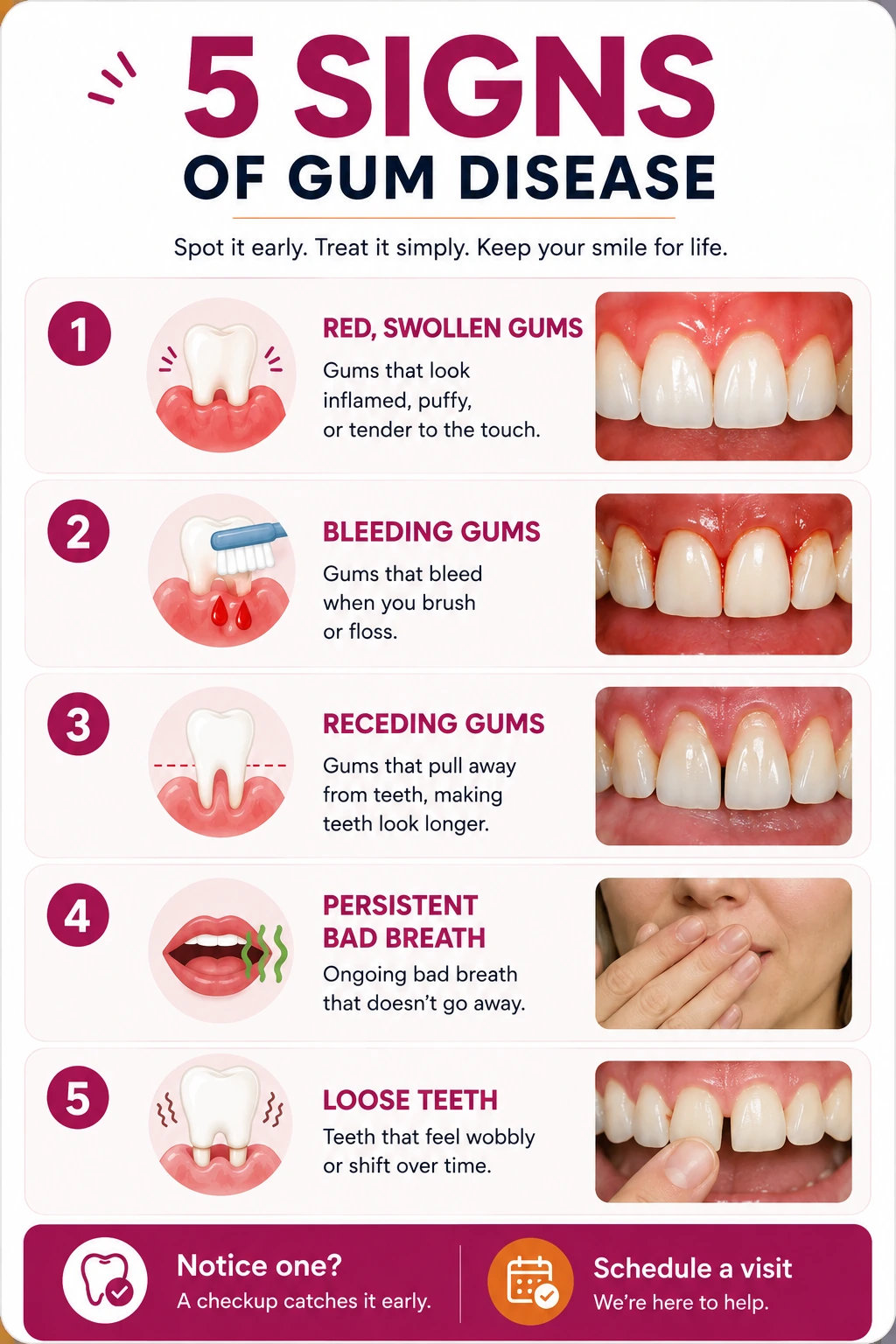
Healthy gums are firm and pale pink. According to the American Academy of Periodontology, gums that look red, puffy, or feel tender are one of the earliest signs that inflammation has set in.
2. Gums that bleed when you brush or floss
This is the sign people notice most — a little pink in the sink. Healthy gums generally don't bleed, so regular bleeding when you brush or floss is worth paying attention to, not brushing off.
3. Gums that are pulling away (receding)
If your teeth suddenly look longer, your gums may be receding — pulling away from the teeth and forming little pockets where bacteria collect. The Cleveland Clinic lists recession as a key marker that gum disease is progressing.
4. Persistent bad breath or a bad taste
Breath that stays bad no matter how much you brush, or a lingering bad taste, can be a sign of the bacteria that drive gum disease living below the gumline. It's easy to blame on food, but when it won't go away, it's worth a mention at your next visit.
5. Loose or shifting teeth
This is a later, more serious sign. When gum disease has damaged the bone and tissue that anchor your teeth, they can start to feel loose or shift how they fit together when you bite. Loose teeth in an adult are never normal — see a dentist promptly.
Can gum disease be reversed?
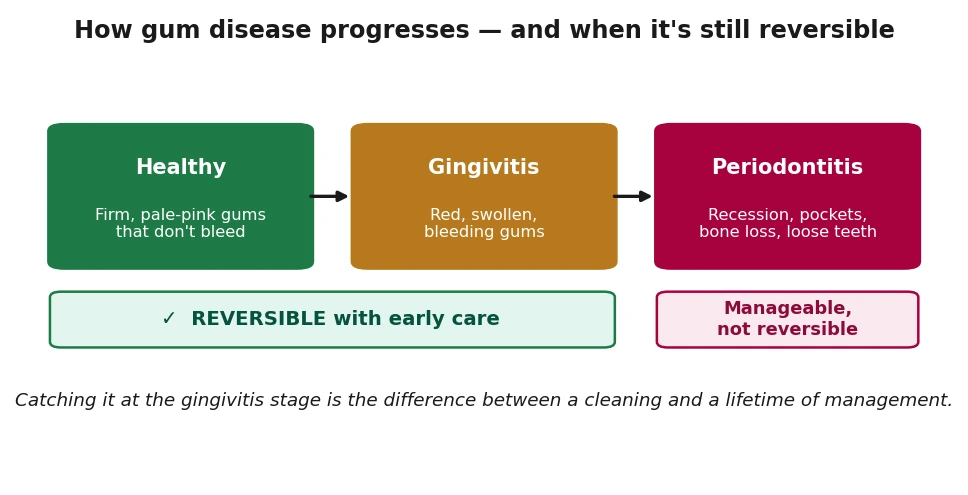
Here's the part that makes catching it early so worth it. The earliest stage, gingivitis, is fully reversible — a professional cleaning plus good home care can return your gums to health. But once it advances to periodontitis, the lost bone support doesn't fully come back; it can be managed and slowed, but not reversed. That's the whole reason not to ignore the early signs — and why keeping up with regular cleanings matters more than most people realise.
How is gum disease treated?
Treatment depends on how far things have gone — and it's usually gentler than people fear. Early gum disease often needs nothing more than a thorough cleaning and better home habits. More advanced cases may need a deeper cleaning below the gumline (scaling and root planing). Before jumping to gum surgery, we also offer a gentle, minimally-invasive option — Perio Protect, custom trays that deliver medication below the gumline at home. It's comfortable, easy to use, and can help many patients get gum disease under control without surgery.
When to see a dentist
Protecting your gums in Southampton
The best defense is simple: brush and floss daily, and keep your regular checkups so we can spot the early signs before you do. Dr. Jeffrey Brenner and the team have cared for Southampton smiles for more than 20 years, and a quick gum-health check is part of every visit. If you've noticed any of the signs above, don't wait for it to settle on its own — it won't. Book a gum-health checkup and we'll take a look.
Noticed a sign?
Call (215) 357-2224 or book a gum-health checkup — catching gum disease early usually means a simple cleaning, not surgery.