
The titanium implant post — the part anchored in your jawbone — can last 25 years or more with proper care. The crown attached to it typically lasts 10 to 15 years before it may need replacing. According to the American Association of Oral and Maxillofacial Surgeons (AAOMS), dental implants have a success rate of about 95%. At Hampton Family Dental in Southampton, PA, Dr. Keyur Dudhat uses 3D imaging to plan each implant for the best possible long-term outcome.
The short version
- The implant post (titanium screw) can last 25–35+ years. The crown on top typically lasts 10–15 years.
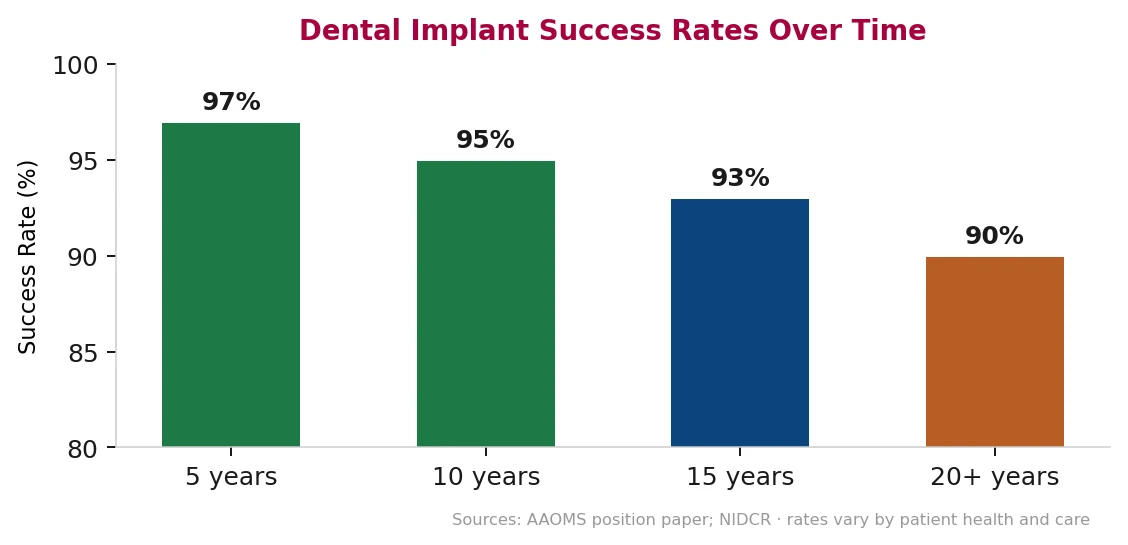
- Dental implants have a success rate of about 95%, according to AAOMS and NIDCR data.
- Smoking, untreated gum disease, and teeth grinding are the biggest threats to implant longevity.
- Daily brushing, flossing around the implant, and regular dental checkups are the simplest ways to protect your investment.
- Our membership plan from $288/year covers cleanings, exams, X-rays, and 15% off implant-related procedures — no deductible, no waiting period.
How long does a dental implant actually last?
A dental implant is made of two main parts, and each has a different lifespan. Understanding this split is the key to realistic expectations.
The implant post vs. the crown on top
The implant post — the titanium screw placed into your jawbone — is built to last. With good oral hygiene and regular checkups, the post can serve you for 25 years or more. Some patients keep their original post for life. The crown (the visible tooth-shaped piece) sits on top of the post and takes the daily wear of chewing. Crowns typically last 10 to 15 years before they may need replacing due to normal wear, chips, or changes in your bite. The abutment — the small connector between the post and crown — is usually replaced at the same time as the crown.
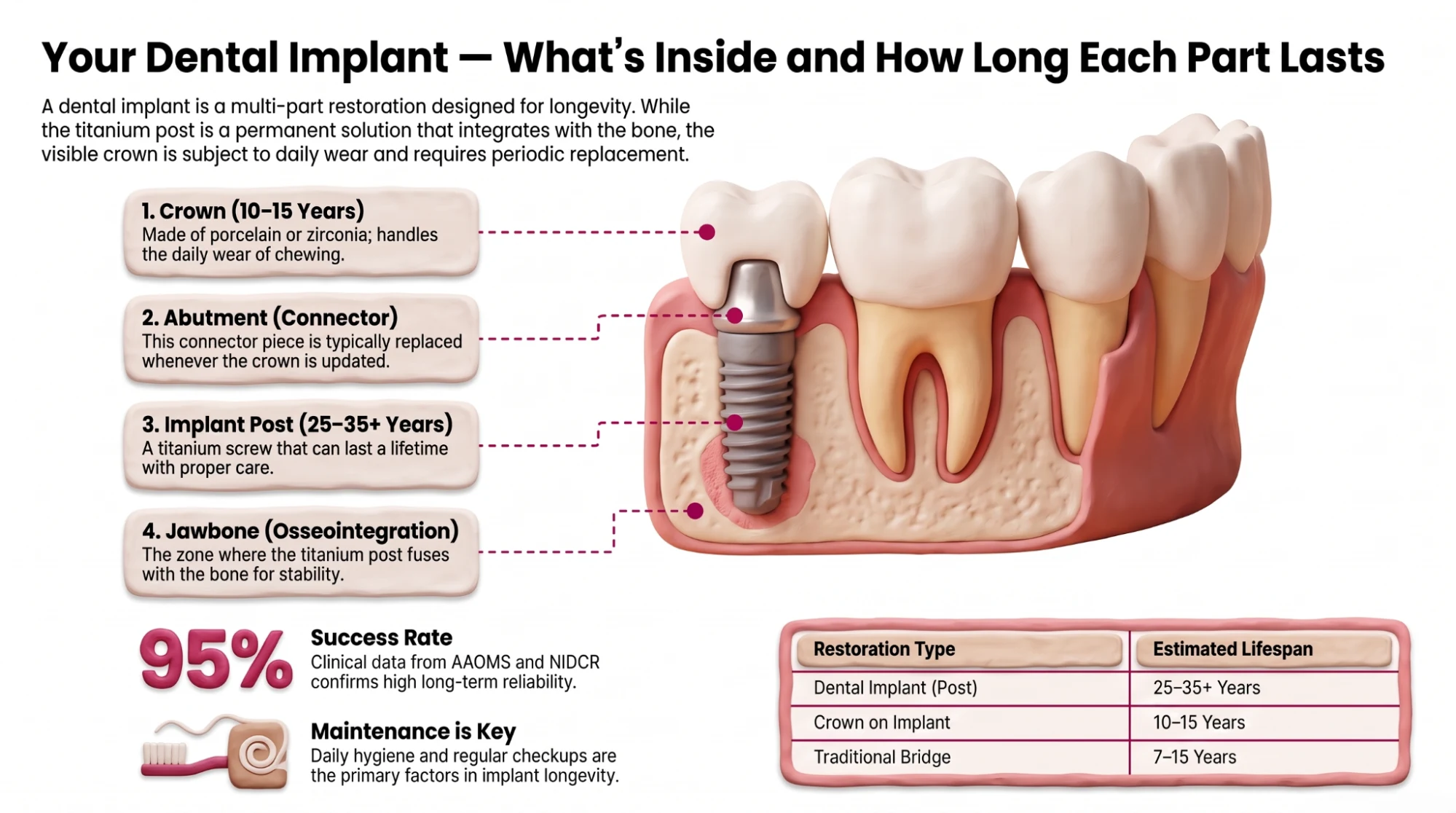
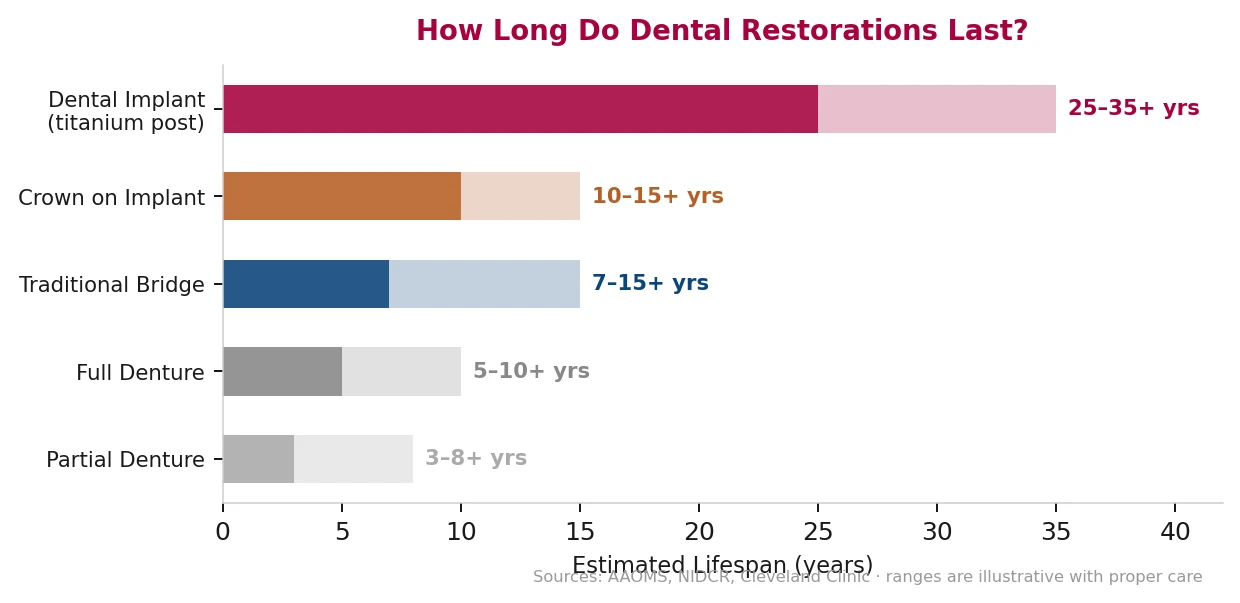
| Restoration type | Estimated lifespan | Notes |
|---|---|---|
| Dental implant (titanium post) | 25–35+ years | Can last a lifetime with excellent care |
| Crown on implant | 10–15 years | Normal wear; may need one replacement over the life of the post |
| Traditional dental bridge | 7–15 years | Requires healthy adjacent teeth; may need redo |
| Full denture | 5–10 years | Fit changes as bone resorbs; periodic reline needed |
| Partial denture | 3–8 years | Clasps wear; may affect surrounding teeth |
Want to explore whether an implant is the right option for you? See our dental implant options in Southampton, or read our guide comparing implants, dentures and bridges.
What affects how long your implant lasts?
Not every implant lasts the same length of time. Several factors — some within your control, some not — influence how many years you get.
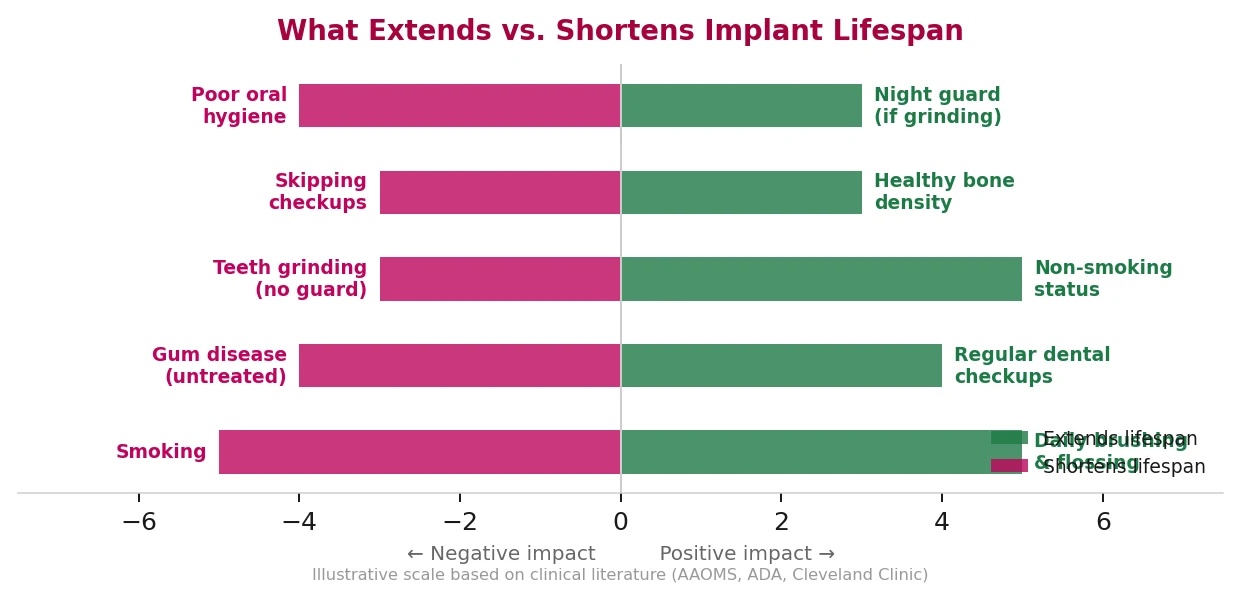
Factors that help
- Daily oral hygiene: brushing twice a day and flossing around the implant keeps the surrounding gum tissue healthy. Plaque builds up on implants just like natural teeth.
- Regular dental checkups: your dentist monitors bone levels, gum health, and the condition of the crown. Catching small issues early prevents bigger ones.
- Not smoking: one of the single best things you can do for implant longevity. Smoking restricts blood flow and slows healing.
- Good overall health: conditions like uncontrolled diabetes can affect healing and bone integration. Managing your health helps your implant thrive.
Factors that hurt
- Smoking: smokers face a significantly higher risk of implant failure, according to AAOMS. If you smoke, your dentist will discuss this with you before the procedure.
- Untreated gum disease: peri-implantitis, an infection of the tissue around the implant, is the leading cause of implant failure. It is treatable when caught early.
- Teeth grinding (bruxism): chronic grinding puts excessive force on the crown and post. A custom night guard can help protect both.
- Skipping dental visits: without regular monitoring, small problems become big ones. Your dentist is your first line of defense.
How do dental implants work?
A dental implant replaces a missing tooth root with a small titanium post that fuses with your jawbone through a process called osseointegration. Here is what happens, step by step:
- Step 1 — Evaluation and planning: your dentist takes X-rays or a 3D CBCT scan to assess your bone density and plan the exact placement angle.
- Step 2 — Implant placement: the titanium post is surgically placed into your jawbone under local anesthesia. Most patients describe the procedure as less uncomfortable than they expected.
- Step 3 — Healing and osseointegration: over the next 3 to 6 months, the bone grows around and bonds with the titanium post. This is what gives the implant its strength and stability.
- Step 4 — Abutment and crown: once healed, a connector (abutment) is placed on the post, and a custom crown — matched to your natural teeth — is attached on top.
Do dental implants hurt?
Most patients say the procedure was less uncomfortable than they expected. Your dentist uses local anesthesia during placement, so you should not feel pain during surgery. After the procedure, discomfort typically peaks in the first 24 to 72 hours. Most people manage it with over-the-counter pain relief like ibuprofen and cold compresses. Prescription medication is available if needed, but many patients do not require it. Soreness and mild swelling usually fade within a week. If pain increases after the first few days instead of improving, contact your dentist — it could signal an issue that needs attention.
Are dental implants safe?
Dental implants have been used successfully for over 40 years. According to AAOMS, the success rate is about 95%. Titanium is biocompatible — your body accepts it without an allergic reaction in the vast majority of cases. Risks exist with any surgical procedure. Possible complications include infection at the implant site, nerve damage (rare), sinus issues with upper-jaw implants, and implant failure if the bone does not integrate properly. A trained dentist using current imaging technology like CBCT scans can significantly reduce these risks.
At Hampton Family Dental, Dr. Dudhat plans every implant with 3D imaging to map your bone structure before the first incision. Sources: AAOMS position paper and the National Institute of Dental and Craniofacial Research (NIDCR). Rates vary by patient health, oral hygiene, and placement technique.
Considering a dental implant?
Book a consultation and we'll assess your bone, walk you through the options, and give you an honest picture of what to expect.
Your implant-care checklist: how to make them last
Taking care of a dental implant is not complicated — it is mostly the same routine you should follow for natural teeth, with a few specific additions.
| Frequency | Task | Why it matters |
|---|---|---|
| Daily (brushing) | Brush twice with a soft-bristle toothbrush | Removes plaque from the crown and gumline |
| Daily (flossing) | Floss or use an interdental brush around the implant | Cleans where gum tissue meets the implant — the top spot for bacterial buildup |
| Daily (rinsing) | Use an antimicrobial or alcohol-free mouthwash | Reduces bacteria without irritating healing tissue |
| Every 6 months (cleaning) | Professional cleaning at your dentist | Removes hardened plaque (calculus) that home care cannot reach |
| Every 6 months (exam) | Dental exam with X-ray as needed | Monitors bone levels and checks for early signs of peri-implantitis |
| As needed (night guard) | Wear a night guard if you grind your teeth | Protects the crown and post from excessive force |
| As needed (reporting) | Report any looseness, pain, or gum changes | Early intervention prevents implant failure |
Our in-office membership plan ($288/year) covers your twice-yearly cleanings, exams, and X-rays, plus 15% off additional procedures — including crown replacements. No deductible, no annual max, no waiting period. Learn about scheduling.
Why no dairy after a dental implant?
Some dentists recommend avoiding dairy products for a short period after implant surgery. The reasons are practical, not permanent: dairy can sometimes trigger nausea if you are still feeling the effects of anesthesia or sedation; it may increase mucus in some people, which is uncomfortable when you are trying to keep the surgical site clean; and in the first 24 hours, minimizing foods that could introduce bacteria near the surgical site is a standard precaution. This restriction is typically short-lived — most patients can return to their normal diet, including dairy, within a few days. Your dentist will give you specific aftercare instructions based on your procedure.
When should you call your dentist about an implant?
- Pain that gets worse after the first 3–4 days instead of better
- Swelling that increases or spreads after the first week
- The implant or crown feels loose
- Persistent bad taste or smell near the implant site
- Gums pulling away from the implant
- Numbness or tingling that does not resolve