
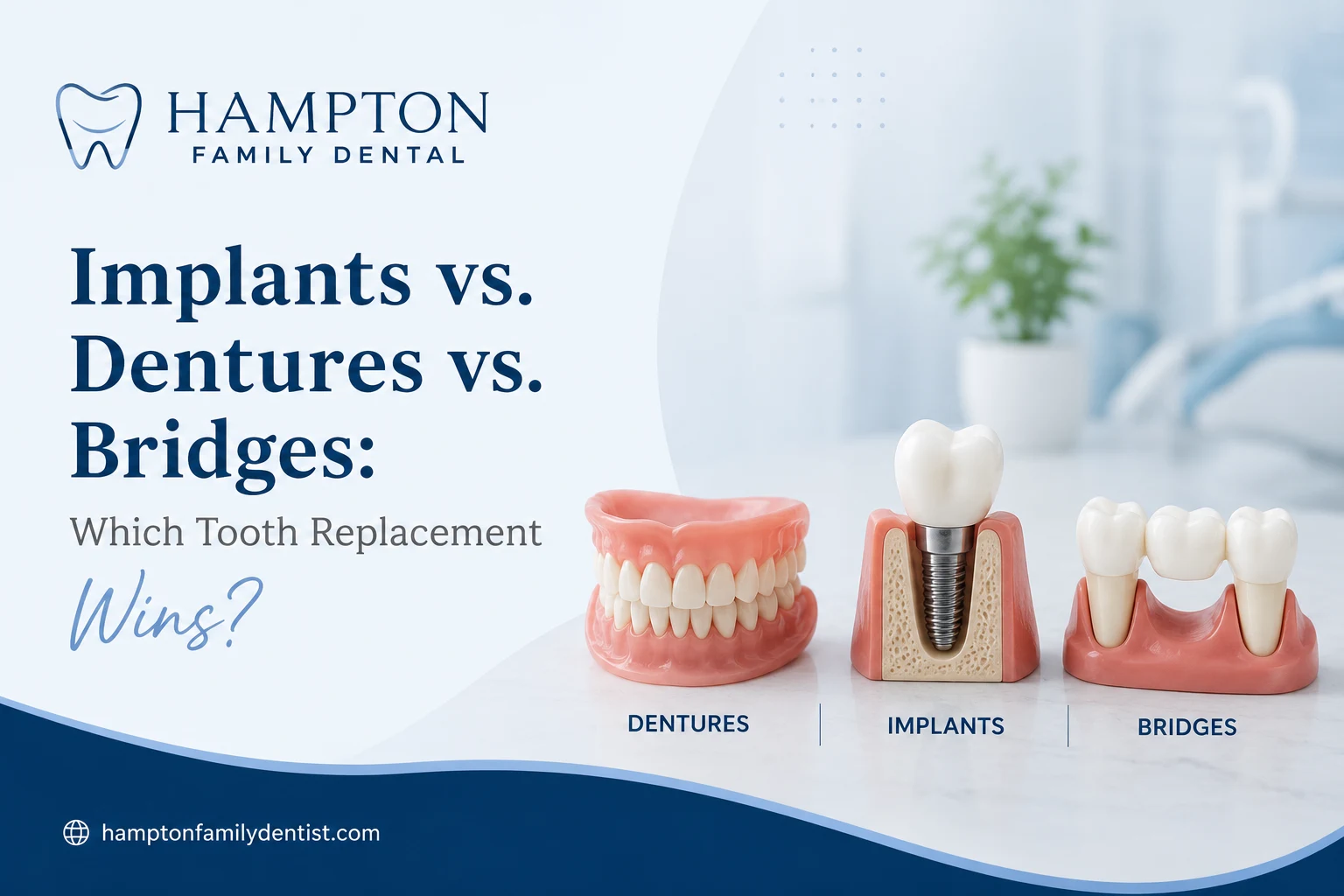
A dental bridge fills a gap using the teeth on either side ($2,000–$5,000); an implant is a titanium post topped with a crown that stands on its own ($3,000–$6,500); a partial denture is a removable option ($1,500–$3,600). Implants last longest and protect the jawbone; bridges are faster and mid-cost; dentures cost least. The best choice depends on your budget, bone, and how many teeth are missing.
The short version
- A bridge uses neighboring teeth to fill a gap; an implant stands alone; a denture is removable.
- Upfront cost is lowest for dentures ($1,500–$3,600), mid for bridges ($2,000–$5,000), highest for implants ($3,000–$6,500).
- Only implants preserve the jawbone — bridges and dentures don't stop the slow bone loss under a gap.
- Implants last 20+ years; bridges about 10–15; dentures about 5–8 — so implants can cost less over time.
- None is “best” for everyone — the right pick depends on your budget, jawbone, and how many teeth you're replacing.
The three options
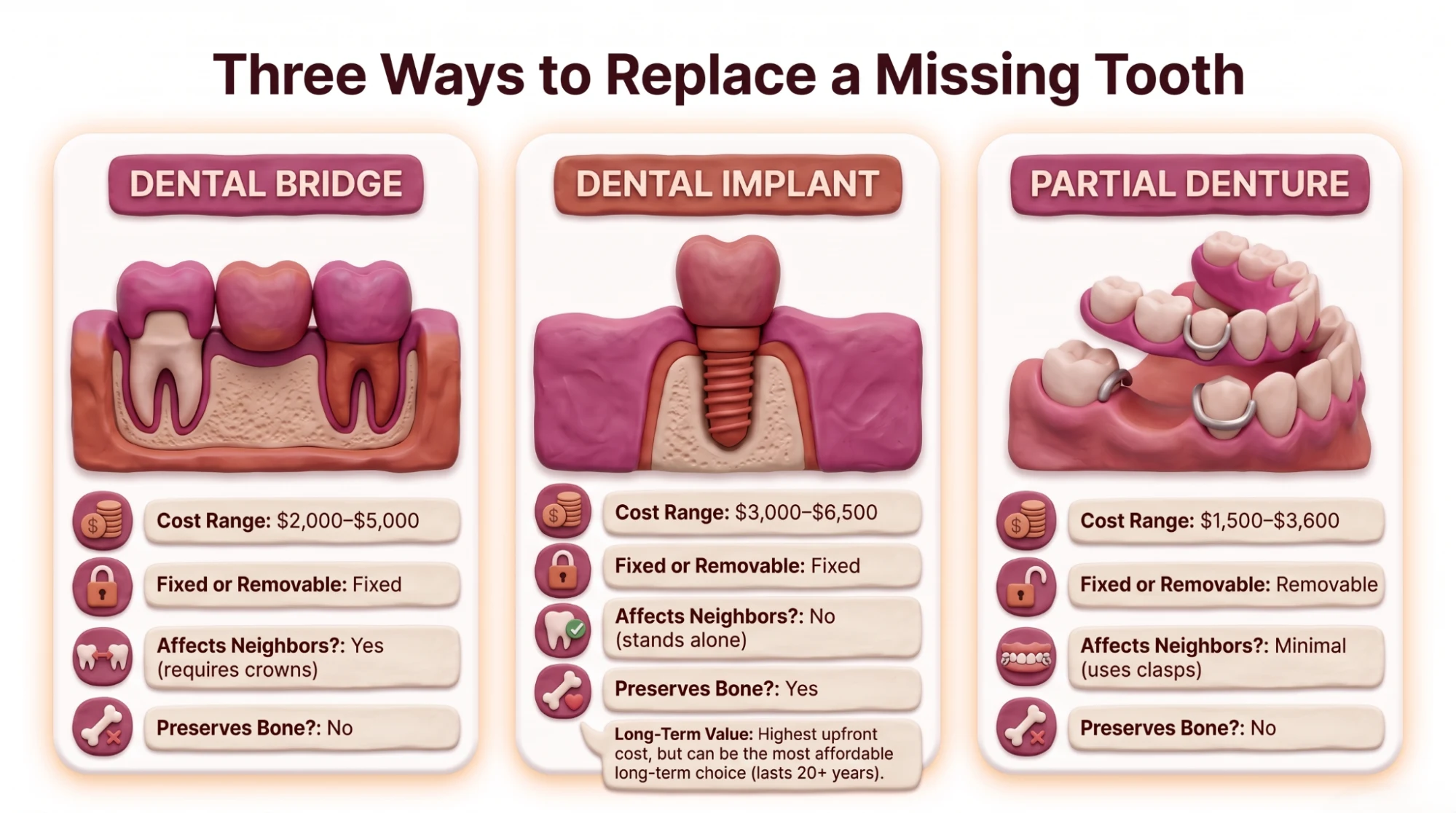
If you're missing a tooth, you have three main ways to replace it, and they work quite differently. A dental bridge at Hampton Family Dental fills the gap by anchoring a false tooth to crowns on the two neighboring teeth. Dental implants are titanium posts placed in the jaw and topped with a crown, so each one stands on its own. And dentures and partials are removable appliances that clip onto or rest against your remaining teeth. The American Dental Association recognizes all three as standard, proven options.
Implants vs. dentures vs. bridges at a glance
| Factor | Implant | Bridge | Denture (partial) |
|---|---|---|---|
| Upfront cost | $3,000–$6,500 | $2,000–$5,000 | $1,500–$3,600 |
| Fixed or removable | Fixed | Fixed | Removable |
| Affects neighbor teeth | No | Yes (crowned) | Minimal |
| Protects jawbone | Yes | No | No |
| Lifespan | 20+ years | 10–15 years | 5–8 years |
| Surgery needed | Yes | No | No |
| Best for | Long-term, single or few gaps | Fast fix, healthy neighbors | Budget, several teeth |
How much does each option cost?
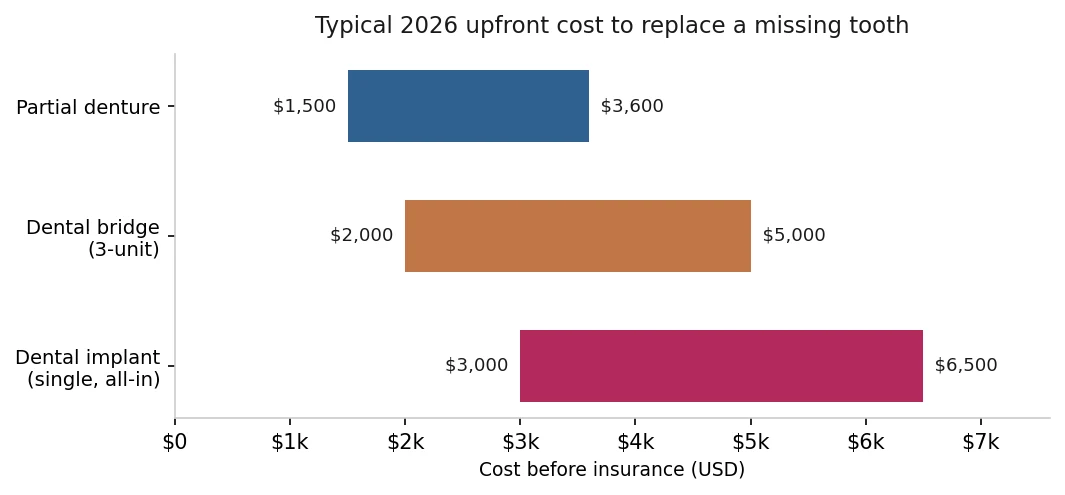
Upfront, a removable partial denture is usually cheapest ($1,500–$3,600), a bridge sits in the middle ($2,000–$5,000 for a typical 3-unit), and a single implant costs the most ($3,000–$6,500 all-in). Since implants are involved, it helps to also read how much implants cost. But upfront price isn't the whole story: because a bridge or denture may need replacing every 5–15 years while an implant can last decades, replacing a bridge twice can end up costing more than one implant. Our membership plan and financing can make any of the three easier on the budget.
What about your jawbone?
This is the factor that doesn't show up on the price tag but matters most over time. When a tooth is gone, the jawbone underneath is no longer stimulated and slowly shrinks — the Cleveland Clinic notes a large share of ridge width can be lost in the first year. Bridges and dentures sit on top of the gum and don't stop that. Because implants replace the tooth root, they help preserve the bone, according to oral surgeons (AAOMS). It's not a reason to rule out a bridge or denture — it's just a real trade-off worth knowing.
How long does each option last?
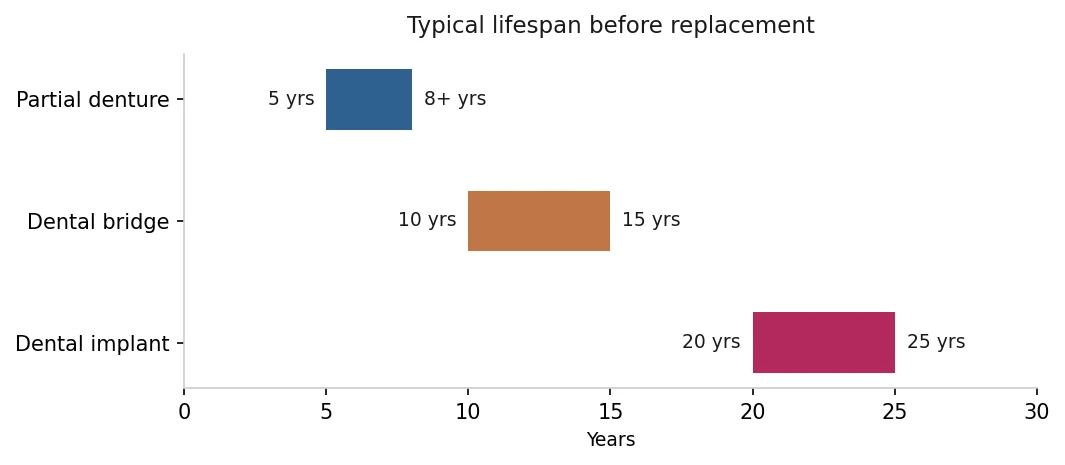
Implants are the durability winner: the post itself often lasts 20 years or more, with the crown on top replaced every 10–15. A well-made bridge lasts about 10–15 years, sometimes less if the supporting teeth have trouble. Partial dentures generally last 5–8 years before they need relining or remaking, partly because the jaw changes shape underneath them. That longer implant lifespan is why the higher upfront cost can even out — though it doesn't erase the bigger first bill.
Which option is right for you?
Lean toward an implant if you want the longest-lasting result, you want to protect your jawbone, and you have — or can build — enough bone for the post. The National Institute of Dental Research notes tooth loss is common, and there's no shame in any of these paths — what matters is the one that fits your mouth and your life.
When a bridge is the better choice
A bridge shines when the teeth on either side of the gap already need crowns anyway, when you want to avoid surgery, or when you'd like the gap closed quickly — how a bridge is fitted usually takes just a couple of visits. It's a proven, fixed solution that doesn't come out at night.
When a denture makes the most sense
A partial denture is often the smart pick when you're replacing several teeth at once, when budget is the deciding factor, or when surgery isn't right for your health. Many people also start with a denture and move to implants later. If you're weighing removable against implant-anchored, our guide to dentures vs implant-supported dentures digs into that choice.
Replacing a missing tooth in Southampton
The honest truth is that the right answer depends on your specific mouth — how many teeth are missing, the health of the neighbors, and how much bone you have. Dr. Keyur Dudhat plans tooth replacement with 3D imaging and will walk you through all three options, costs included, so you can decide without pressure. Because we offer implants, bridges, and dentures in-house, we can guide you to what actually fits — not just what we happen to sell.
Missing a tooth and weighing your options?
Book a tooth-replacement consultation and we'll walk you through implants, bridges, and dentures — costs included — so you can choose with confidence.