
A dental crown typically costs $800 to $3,000 without insurance, depending on the material. Porcelain-fused-to-metal crowns are often the most affordable long-term option, while all-ceramic, zirconia, and gold crowns cost more. Most crowns last 10 to 15 years, and gold can last 20 to 30 years. At Hampton Family Dental in Southampton, PA, Dr. Keyur Dudhat helps each patient choose the material that fits their tooth, their bite, and their budget.
The short version
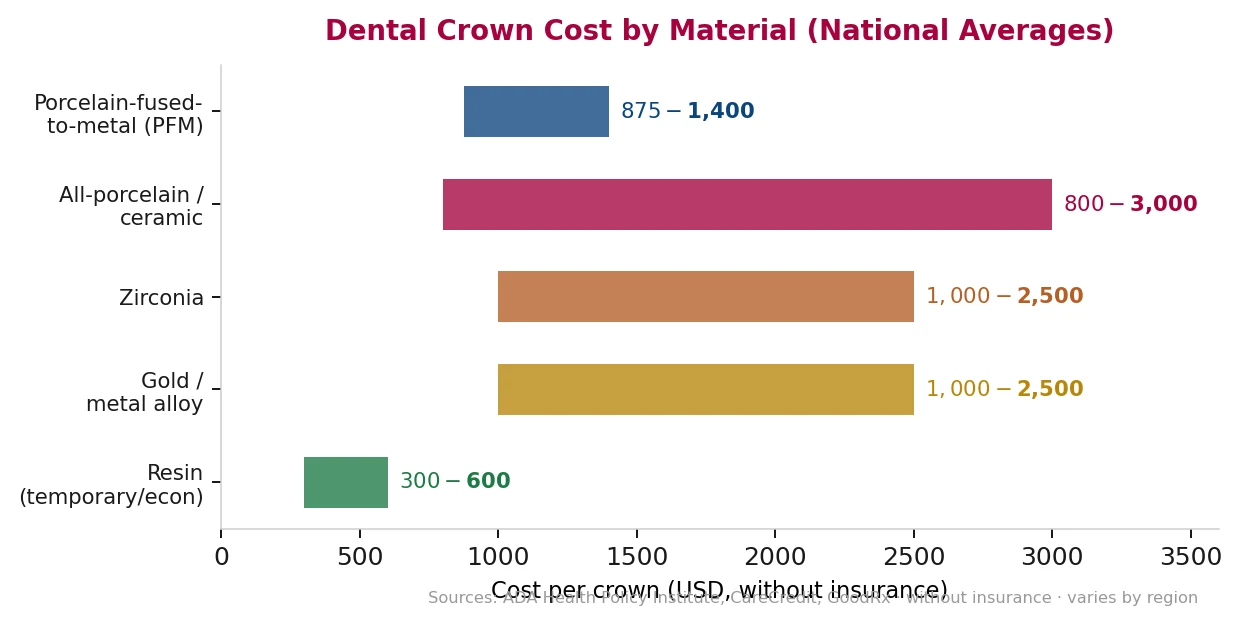
- Material is the biggest price driver. Crowns range from about $300 (resin) to $3,000 (all-ceramic) per tooth without insurance.
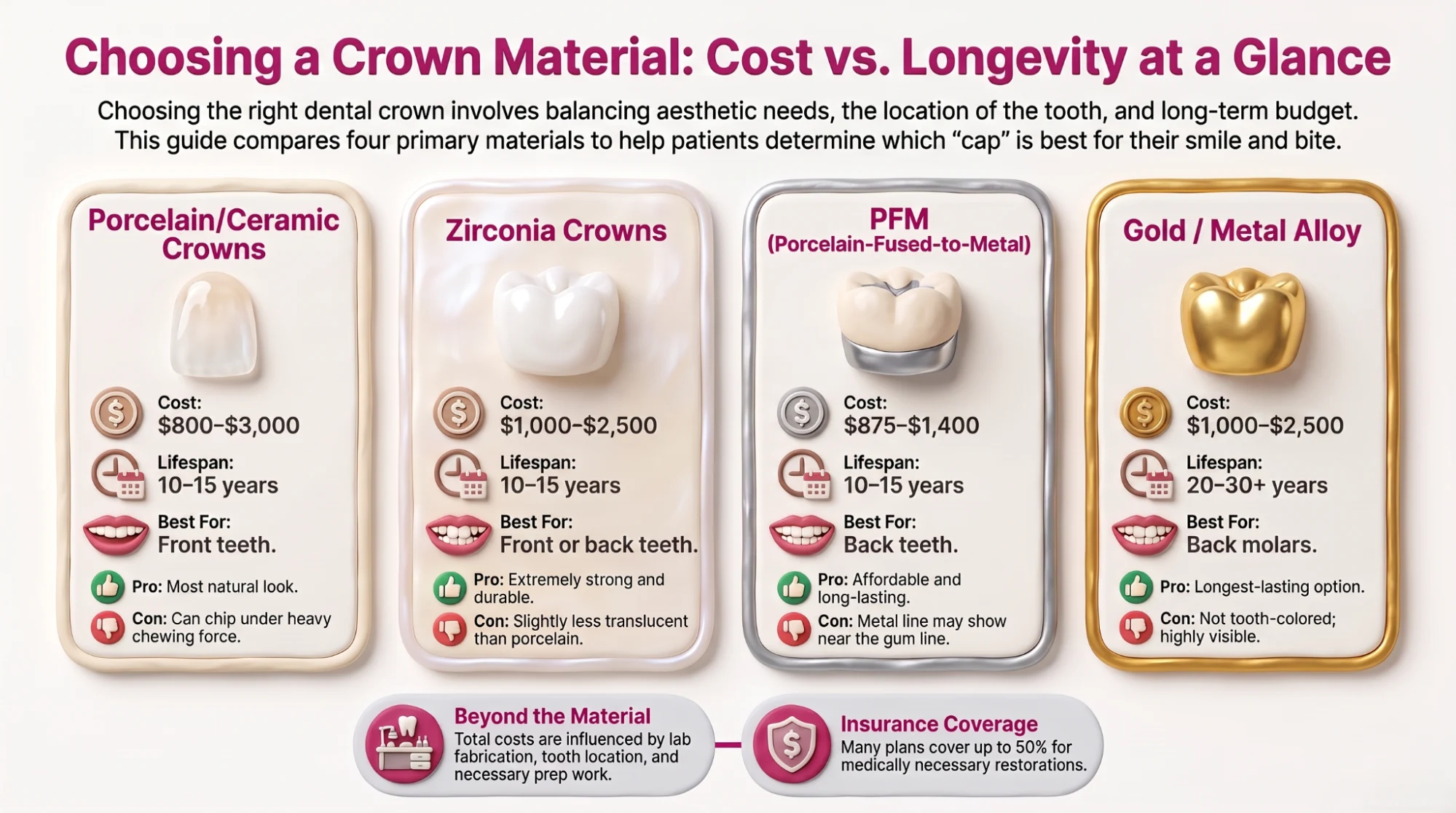
- Most crowns last 10 to 15 years. Gold crowns can last 20 to 30 years or more with good care.
- Your final price also depends on lab vs. same-day fabrication, the tooth's location, and any prep work like a build-up or root canal.
- Many crowns follow a root canal — the crown restores strength to a tooth that could otherwise fracture.
- Our membership plan from $288/year includes 15% off procedures — a practical option if you don't have dental insurance.
How much does a dental crown cost?
The price of a dental crown depends most on the material it's made from. A crown is a custom-made cap that covers a damaged tooth, and the material you and your dentist choose affects both the cost and how long it lasts.
Cost by crown material
| Crown material | Cost per crown | Typical lifespan | Best for |
|---|---|---|---|
| Resin (temporary/economy) | $300–$600 | 3–5 years | Short-term or budget cases |
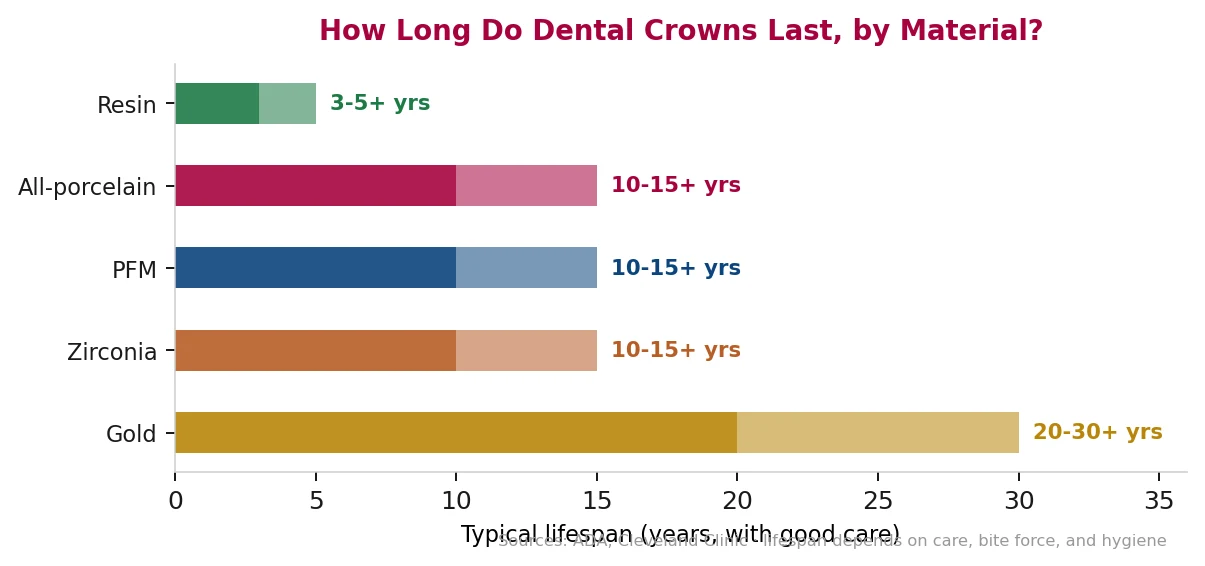
| Porcelain-fused-to-metal (PFM) | $875–$1,400 | 10–15 years | Back teeth; affordable and durable |
| All-porcelain / ceramic | $800–$3,000 | 10–15 years | Front teeth; most natural look |
| Zirconia | $1,000–$2,500 | 10–15 years | Front or back; very strong |
| Gold / metal alloy | $1,000–$2,500 | 20–30+ years | Back molars; longest-lasting |
With and without insurance
Many dental insurance plans cover about 50% of a crown when it's medically necessary — after your deductible and up to your annual maximum. That can bring your out-of-pocket cost down significantly, though annual maximums sometimes limit how much is covered in a single year. If you're not sure what your plan covers, verify your insurance benefits before treatment. If you don't have insurance, our membership plan from $288/year includes cleanings, exams, and X-rays, plus 15% off procedures like crowns — with no deductible and no waiting period.
What are the different types of dental crowns?
Crowns are made from several materials, each with its own strengths:
- All-porcelain / ceramic: the most natural-looking option, ideal for front teeth. It can chip under heavy force, so it's less common on molars.
- Zirconia: extremely strong and tooth-colored. A good all-rounder for front or back teeth, and increasingly popular.
- Porcelain-fused-to-metal (PFM): a metal core with a porcelain outer layer. Durable and more affordable, though a thin metal line can sometimes show at the gum over time.
- Gold / metal alloy: the longest-lasting and gentlest on opposing teeth. Not tooth-colored, so it's usually used on back molars.
- Resin: the least expensive, but wears faster. Often used for temporary crowns while a permanent one is made.
Your dentist will help you weigh appearance, strength, and cost. Learn about dental crowns at Hampton Family Dental to see how the options apply to your situation.
How long do dental crowns last?
Most dental crowns last 10 to 15 years with good care. Gold crowns are the exception — they can last 20 to 30 years or more. Resin crowns wear fastest, usually 3 to 5 years. How long your crown lasts depends on more than the material:
- Oral hygiene — brushing, flossing, and regular cleanings protect the tooth underneath
- Bite force and grinding — heavy grinding wears crowns faster; a night guard helps
- Tooth location — molars take more chewing force than front teeth
- Diet and habits — chewing ice or hard candy can crack any crown
A crown protects the tooth beneath it, but it doesn't make that tooth cavity-proof. Keeping up with checkups is the simplest way to get the full lifespan out of your crown.
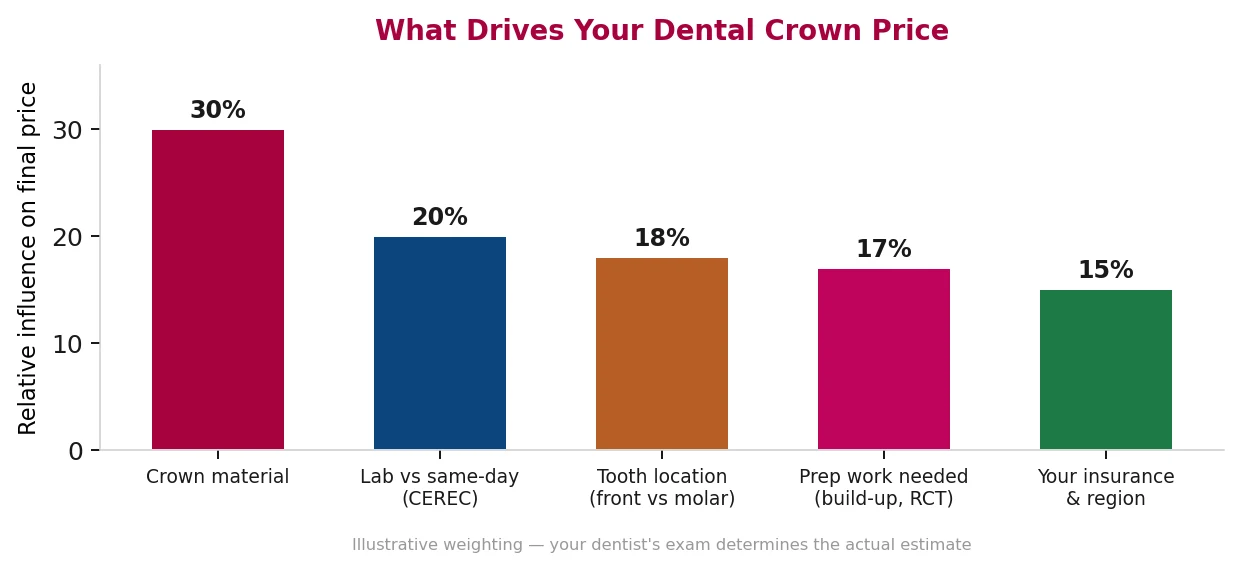
What drives your dental crown price?
Two people can get crowns on the same day and pay different amounts. Here's what accounts for the difference:
- Material (biggest factor): gold, zirconia, and all-ceramic cost more than PFM or resin.
- Lab vs. same-day: a crown made by a dental lab may cost differently than one milled in-office the same day (CEREC). Same-day crowns save a visit but aren't right for every case.
- Tooth location: front teeth often need more attention to appearance; molars need more strength.
- Prep work needed: if the tooth needs a build-up, a post, or a root canal first, that adds to the total.
- Insurance and region: coverage and local pricing shift the final out-of-pocket cost.
This is why the honest answer to “how much is a crown?” is always “it depends on your exam.” Your dentist can give you a firm estimate only after seeing the tooth and any X-rays.
What is the dental crown procedure like?
A traditional crown usually takes two visits. At the first, your dentist numbs the area, removes any decay, and shapes the tooth so the crown will fit over it — an impression or digital scan is taken, and a temporary crown is placed. Between visits, a dental lab custom-makes your permanent crown to match your bite and neighboring teeth, which usually takes a couple of weeks. At the second visit, the temporary comes off and the permanent crown is checked for fit and color, adjusted, and cemented in place. Some offices offer same-day (CEREC) crowns milled in-office, which can combine both visits into one. Ask your dentist whether that's an option for your tooth.
Do you need a crown after a root canal?
In most cases, yes — especially for back teeth. A root canal removes the tooth's inner pulp, which can leave the tooth more brittle over time. A crown restores strength and protects the tooth from cracking under normal chewing. Front teeth sometimes need only a filling after a root canal, but molars almost always need a crown because they handle the most force. When you're budgeting, it helps to look at the cost of a root canal and the crown together, since they're usually part of the same treatment. Learn more about root canal treatment.
Crown vs. filling: which do you need?
A filling and a crown solve different problems. The right choice depends on how much of the tooth is damaged.
| Factor | Filling | Crown |
|---|---|---|
| Best for | Small to moderate cavities | Large damage, cracks, or after a root canal |
| How much tooth is covered | Fills the cavity only | Covers the entire visible tooth |
| Typical cost | $150–$450 | $800–$3,000 |
| Lifespan | 5–15 years | 10–15 years (gold longer) |
If a large portion of the tooth is gone, a filling may not hold — it can leave the tooth weak and prone to cracking. In those cases a crown is the option that lasts. Your dentist will recommend whichever will protect the tooth best, not just the cheaper one today.
Wondering whether you need a crown?
Book a consultation and we'll look at the tooth, explain your material options, and give you a clear estimate before anything begins.