
A root canal typically costs $700 to $1,800 depending on the tooth — front teeth cost the least, molars the most — with a crown usually adding $800 to $2,000. Insurance often covers 50–80%. And does it hurt? Not the way people fear: the pain comes from the infection beforehand, and the procedure itself, done under local anesthesia, relieves it and feels much like a filling.
The short version
- A root canal alone runs about $700–$1,800 depending on the tooth; a crown afterward adds $800–$2,000.
- Molars cost the most because they have more canals; front teeth are the least expensive.
- Insurance usually covers 50–80% of a root canal, bringing out-of-pocket to roughly $200–$900.
- It doesn't hurt the way people fear — the pain is from the infection, and the procedure relieves it.
- Saving the tooth with a root canal is usually cheaper than pulling it and replacing it with an implant.
How much does a root canal cost?
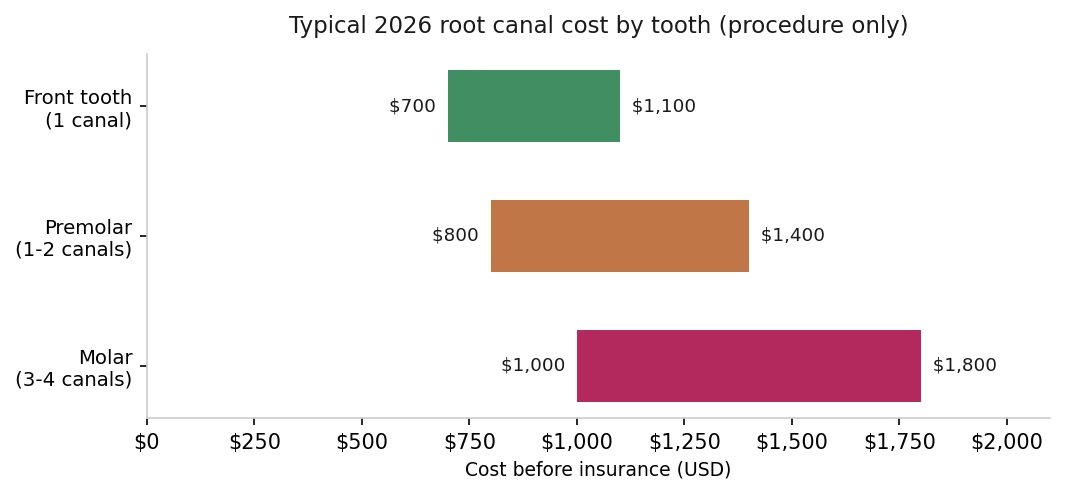
A root canal costs about $700 to $1,800 in 2026, and the biggest factor is which tooth needs it. Front teeth have a single canal and sit at the low end; molars have three or four canals and cost the most. Here's the honest breakdown — and you can see root canal treatment at Hampton Family Dental for how we handle each case:
| Tooth | Canals | Typical cost (procedure only) |
|---|---|---|
| Front tooth (incisor/canine) | 1 | $700–$1,100 |
| Premolar | 1–2 | $800–$1,400 |
| Molar | 3–4 | $1,000–$1,800 |
Don't forget the crown
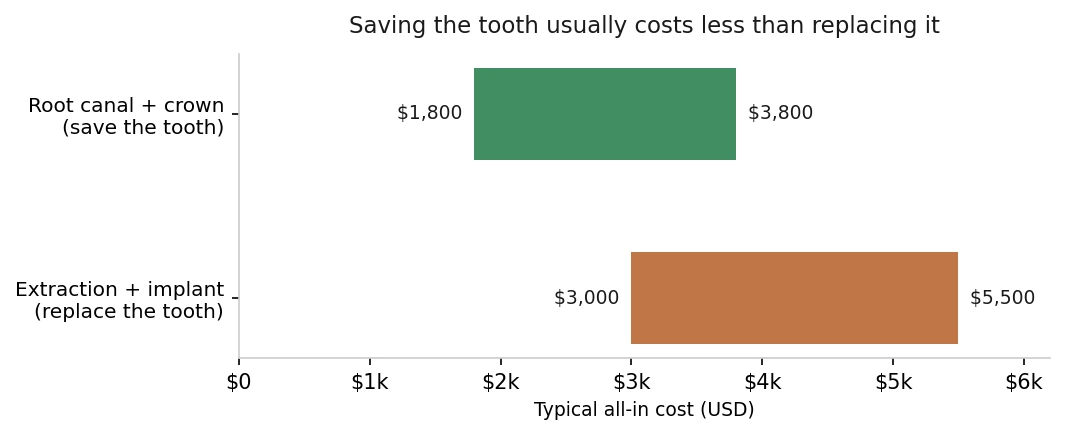
Here's the part that surprises people: the root canal and the crown are two separate bills. Most back teeth need a crown afterward to protect the tooth, and that adds roughly $800 to $2,000. So an all-in molar root canal plus crown commonly totals about $1,800 to $3,800 before insurance. It's worth asking about the full cost up front so the second bill isn't a surprise.
Does insurance cover a root canal?
Most dental plans do cover root canals — usually 50 to 80% as a major restorative procedure — which brings the typical out-of-pocket cost down to around $200 to $900. Your exact share depends on your deductible and annual maximum, so it's smart to get a pre-estimate. We check your benefits before treatment, and our financing and current offers, including CareCredit, can spread out whatever's left.
Does a root canal hurt?
This is the fear that keeps people from getting the treatment that would actually help them — so here's the honest truth. The pain you feel before a root canal comes from the infected, inflamed tooth. The procedure itself is done under local anesthesia, so you're numb the whole time, and according to the American Association of Endodontists, most people say it feels about the same as getting a filling. Far from causing pain, a root canal relieves it. You can read what the procedure actually involves if that helps settle the nerves.
Afterward, the tooth may feel a little sore or tender for a few days as everything settles — over-the-counter pain relief usually handles it — but the deep, throbbing pain that sent you in is gone.
Why does a root canal cost what it does?
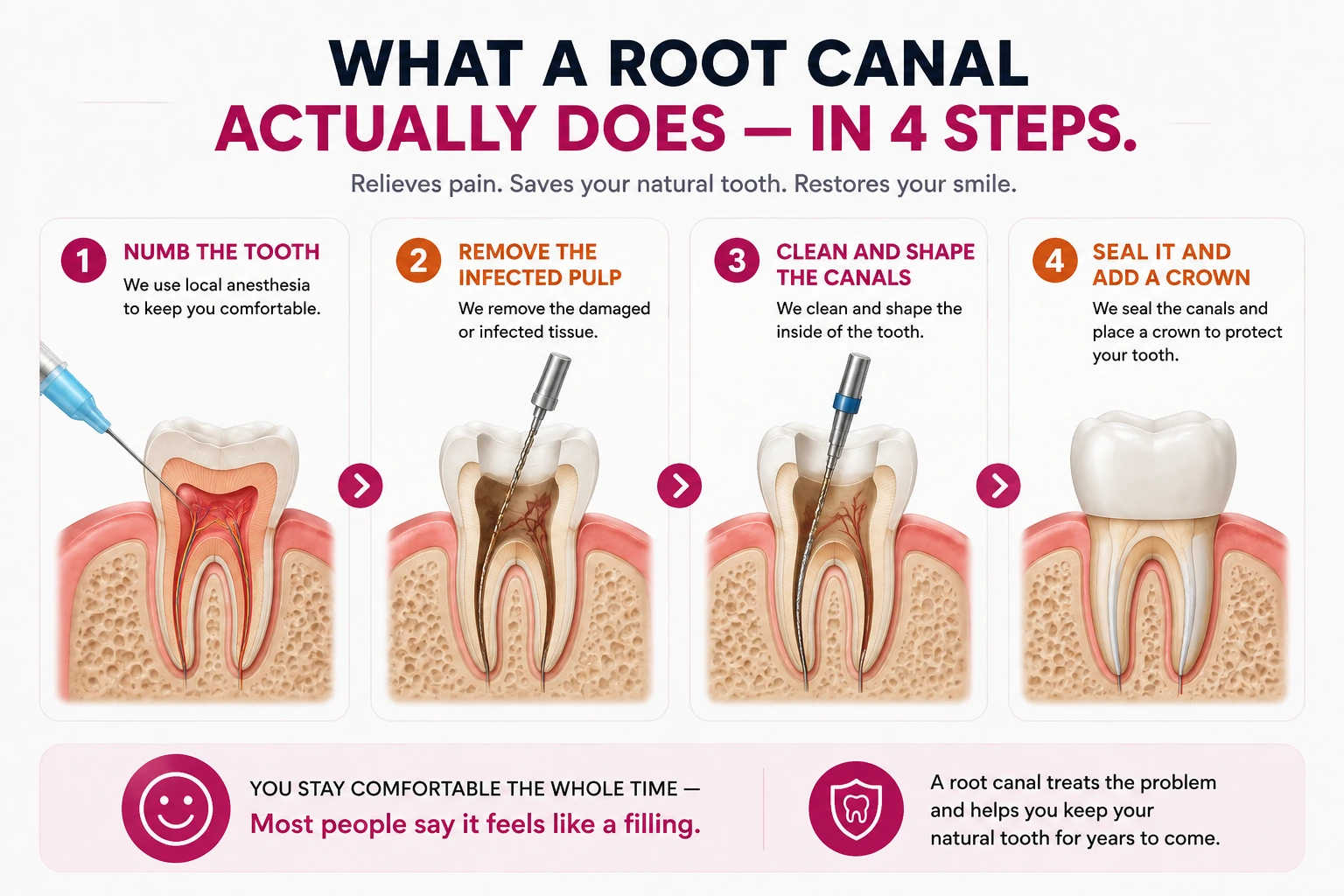
A root canal isn't a quick fix — you're paying for a careful, multi-step procedure: numbing the tooth, removing the infected pulp, cleaning and shaping the tiny canals, and sealing them. Molars cost more because they have more canals to treat and sit at the back of the mouth, where they're harder to reach. A specialist (endodontist) typically charges 20–30% more than a general dentist for the same tooth, which is one reason having it done at your regular dental office can be more affordable.
Is a root canal worth it — or should I just pull the tooth?
It's a fair question, and the honest answer usually favors saving the tooth. Pulling it is cheaper today, but the gap doesn't stay closed — a missing tooth needs replacing, and an implant plus crown typically runs $3,000 to $5,000 or more. A root canal and crown keeps your own natural tooth, usually for far less. Nothing replaces your natural tooth as well as your natural tooth — but the right choice depends on your specific situation, which is what a quick exam sorts out.
What happens if you wait?
Putting it off doesn't make the problem cheaper or easier. An infected tooth doesn't heal on its own — the infection tends to spread, the pain usually gets worse, and a tooth that could have been saved can reach the point where it has to come out. Acting while the tooth is still restorable is almost always the less expensive, less painful path.
Getting a root canal in Southampton
If you've been told you need a root canal, the worst thing to do is nothing. Dr. Jeffrey Brenner and the team have relieved Southampton toothaches for more than 20 years, and we'll give you a clear, written estimate and walk you through exactly what to expect — no pressure, no surprises. Talk to us about your tooth and let's get you out of pain.
In pain or facing a root canal?
Call (215) 357-2224 or book a visit — we'll check your benefits, give you a written estimate, and get you comfortable.