
Dry socket happens when the blood clot that forms after a tooth extraction is lost or dislodged too early, leaving bone and nerves exposed and causing intense, throbbing pain a few days later. It affects about 2–5% of extractions (higher for wisdom teeth). You can lower your risk by avoiding straws, smoking, and forceful spitting while the site heals. If pain worsens around day 3, call your dentist.
The short version
- Dry socket (alveolar osteitis) is when the protective blood clot after an extraction is lost too early.
- It affects roughly 2–5% of extractions — and up to about 20% of impacted wisdom-tooth removals.
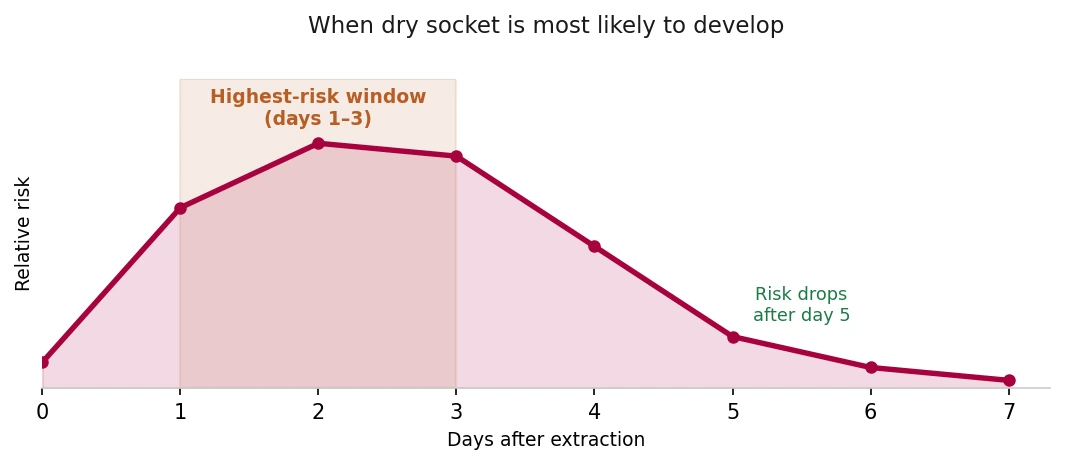
- The tell-tale sign is severe, throbbing pain that starts 1–3 days after the tooth is pulled, often with a bad taste.
- The biggest preventable causes are suction (straws, smoking) and forceful spitting — protect the clot.
- It's treatable and not dangerous, but see your dentist quickly for relief; don't tough it out.
What is dry socket?
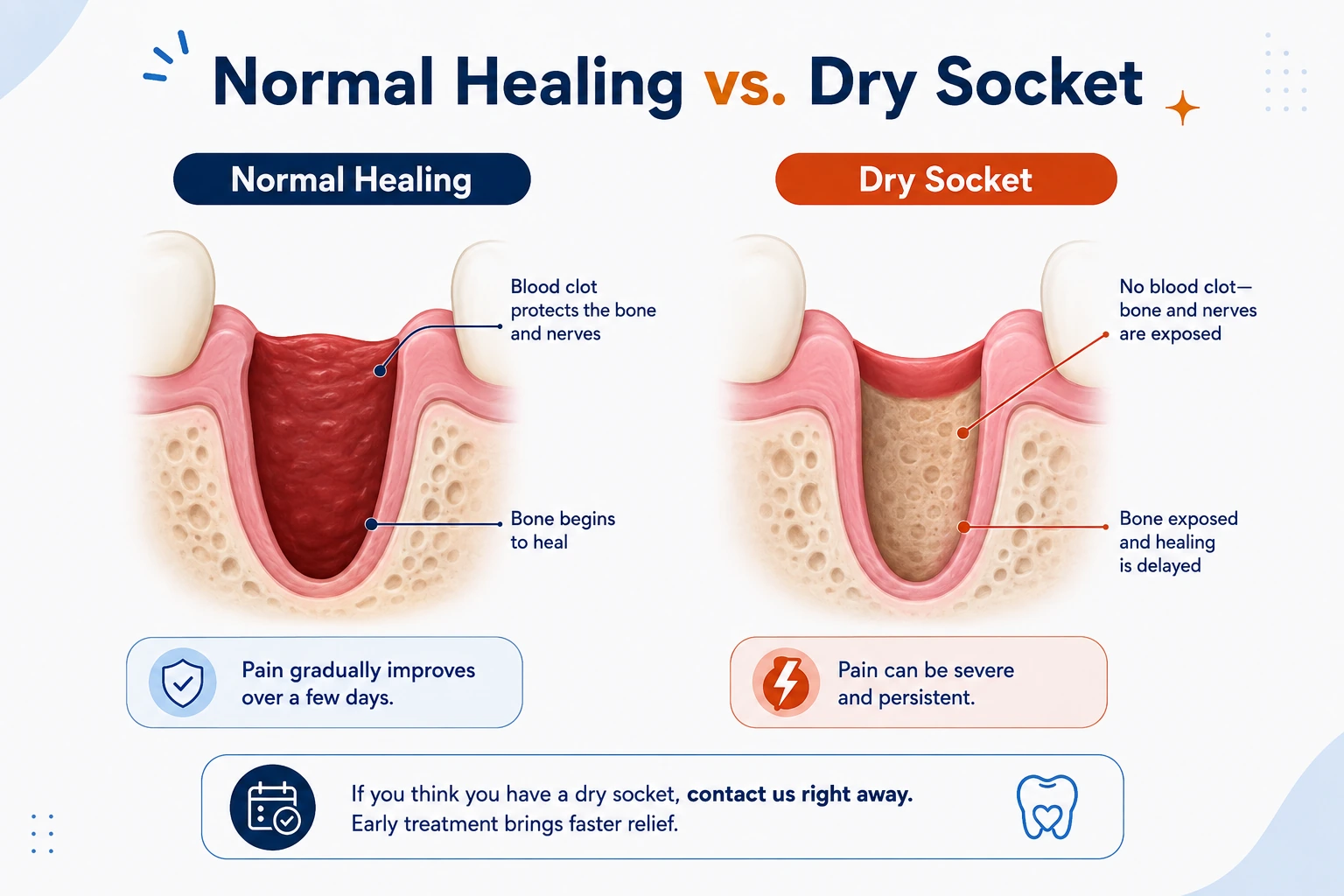
Dry socket is when the blood clot after a tooth extraction is lost too early, exposing the bone and nerves underneath. Normally, after a tooth extraction at Hampton Family Dental or any dental office, a clot forms over the socket like a natural bandage, protecting the area while it heals. Its clinical name is alveolar osteitis. When that clot dissolves or gets dislodged before the gum has healed, the exposed nerves cause the sharp pain dry socket is known for.
What does dry socket feel and look like?
You'll often see an empty-looking socket instead of a dark clot, and you may notice a bad taste or smell. According to the Cleveland Clinic, the classic signs are:
- Severe, throbbing pain that can radiate to your ear, eye, or jaw on that side.
- Pain that starts a few days after the extraction — just when you'd expect to feel better.
- An empty-looking socket where you can see bone instead of a clot.
- A bad taste in your mouth or noticeably bad breath.
When does dry socket usually happen?
Dry socket almost always shows up in the first three to five days after an extraction. As the Harvard Health team explains, the giveaway is pain that gets worse around day three, when it should be getting better. If you reach about day five with no unusual pain, your risk drops sharply. Knowing what to expect from an extraction makes that timeline easier to read.
What causes dry socket — and who's most at risk?
Dry socket affects about 2–5% of all extractions, but that jumps to around 20% for impacted wisdom teeth, per oral surgeons (AAOMS). The clot gets disturbed by suction and pressure in the mouth. You're at higher risk if you:
- Smoke or use tobacco — the suction and chemicals both work against healing.
- Use straws or spit forcefully in the first few days.
- Are having a lower-jaw or wisdom-tooth (molar) extraction.
- Take certain medications, or have had dry socket before.
How to prevent dry socket after an extraction
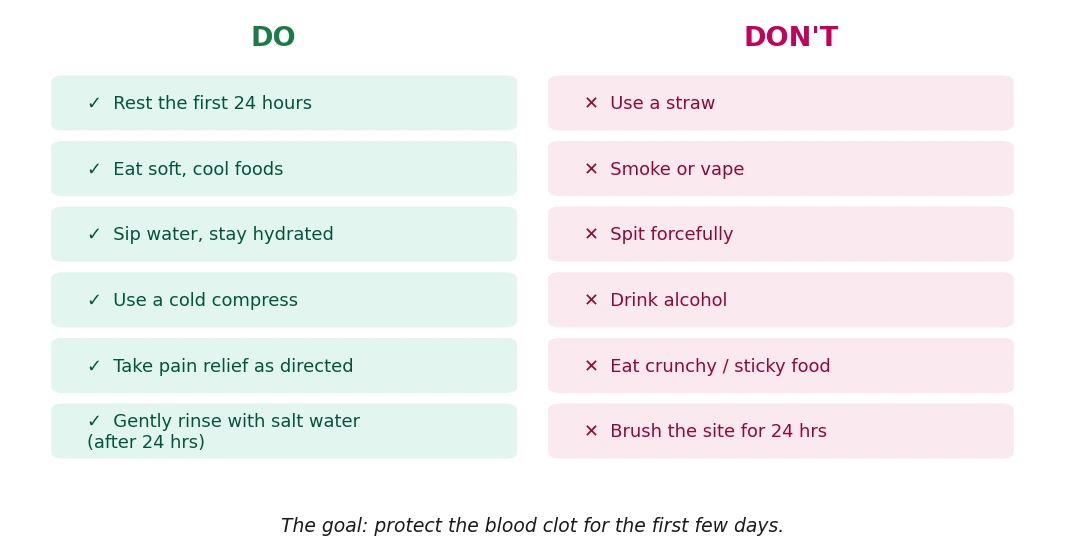
To prevent dry socket, protect the clot. The American Dental Association and your dentist's aftercare instructions come down to a simple do-and-don't list:
The first 24 hours matter most
The clot is most fragile on day one. Rest, skip the straw and the cigarette, avoid alcohol and fizzy or hot drinks, and stick to soft, cool foods like yogurt, applesauce, and smoothies (no seeds). After the first 24 hours, you can gently rinse with warm salt water — gently is the key word. A little care in the first day or two prevents most dry sockets.
How is dry socket treated?
The good news: dry socket is very treatable, and relief is usually fast. Your dentist will gently clean the socket and often place a medicated dressing that soothes the exposed nerves almost immediately. You may get a fresh dressing changed over a few days, plus guidance on pain relief. Most people go from significant pain to real comfort within a day or two of being seen — which is exactly why it's worth coming in rather than waiting it out. If you think something's wrong, book a follow-up visit.
When to call your dentist
Recovering from an extraction in Southampton
If you've had a tooth pulled and something doesn't feel right, don't sit at home worrying — call us right away. Dr. Jeffrey Brenner and the team have guided Southampton patients through extractions and recoveries for over 20 years, and getting seen quickly is the fastest way back to comfort. Still deciding about the procedure itself? You can talk to us about your extraction first. When you're healed and ready, we can also talk about replacing the tooth later if that's the plan.
Worried about healing after an extraction?
Call (215) 357-2224 or book a visit — we'll take a look and get you comfortable again.